
What Van Buren County Criminal Court Records Contain
The criminal court record is the case file, not a single arrest entry. It opens when a charge is filed and grows with every step that follows. Inside are the charging document, the arraignment, any bond order, the pleas, the motions, the hearings, and the final disposition and sentence. Probation terms, restitution, fines, and any appeal also land in the file.
That breadth is the difference between a criminal court record and a narrow charge record. A charge record names the offense filed and the initial status. The full case file adds everything the court did afterward. For the arrest side and booking detail, the Van Buren County jail roster on the arrest records and court charges page covers the earliest stage, while the case file picks up once the court takes over.
Most adult criminal files are public. Juvenile cases and set-aside convictions are the main exceptions, and both are covered further down.
How a Criminal Case Moves Through Van Buren County Courts
A Michigan criminal case follows a set path, and each stage adds new entries to the record. Misdemeanors and felonies both start in the Van Buren County district court, but felonies transfer to the 36th Circuit Court after a preliminary examination or a waiver. The flow below shows the usual order.
Criminal case flow: Charges Filed › Arraignment › Preliminary Exam / Bindover › Pretrial › Plea or Trial › Disposition › Sentencing
At arraignment, the court reads the charges, addresses rights, and may set bond. The preliminary examination is a district-court hearing that decides whether enough evidence exists to bind a felony over to circuit court. Pretrial follows, where plea talks and motions play out. The case then ends in a plea or a trial, a disposition, and a sentence. Each of those events shows on the docket and in the file.
Where Van Buren County Criminal Cases Are Heard
The 7th District Court starts all adult criminal cases in Van Buren County. It handles misdemeanor and felony arraignments, issues arrest and search warrants, presides over felony preliminary examinations, sets bail, and accepts bond. Misdemeanors punishable by up to one year stay in the district court from start to finish.
The 36th Circuit Court takes over felony cases after bindover. That is where the full felony case file develops, with the information as the charging document, the trial or plea, the verdict or disposition, and the sentence. The district court runs two locations, Paw Paw for the East division and South Haven for the West division, while circuit felony matters run through Paw Paw.
To find a case, the county case-search links and the state MiCOURT Case Search reach both courts. Older files and full document images may need a clerk request instead.
Key Terms in a Van Buren County Criminal Record
Criminal files use words that carry precise legal meaning. Knowing a few of them makes the record far easier to follow, since the docket rarely spells them out.
- Arraignment
- The first court appearance, where charges and rights are read and bond may be set.
- Preliminary examination
- A district-court hearing that decides whether a felony has enough evidence to move to circuit court.
- Bindover
- The transfer of a felony from district court to circuit court after the exam or a waiver.
- Disposition
- The outcome of a charge or case, such as a dismissal, a plea, or a verdict.
- Probation
- A supervised sentence served in the community under court-ordered conditions.
- Nolle prosequi
- The prosecutor's formal decision not to pursue a filed charge.
What a Van Buren County Criminal Court Record Shows
A criminal case file follows a familiar layout. The header carries the case and party details, and the register of actions logs each event. The table sets out the fields you are most likely to see in a Van Buren County criminal record.
| Field | What It Shows |
|---|---|
| Case Number | The court file number that tracks the case across hearings. |
| Defendant | The person charged, listed against the People of the State of Michigan. |
| Charges | The offense filed, its statute, and its severity as felony or misdemeanor. |
| Amended Charges | Any charge added, reduced, or dropped as the case moves forward. |
| Plea | The defendant's formal response, such as guilty, not guilty, or no contest. |
| Bond | The bail amount or condition set for release before resolution. |
| Disposition | The outcome of each charge, from dismissal to conviction. |
| Sentence | Jail, probation, fines, costs, and restitution ordered after conviction. |
| Register of Actions | The dated list of every filing, hearing, and order in the case. |
The Prosecutor's Role in Van Buren County Cases
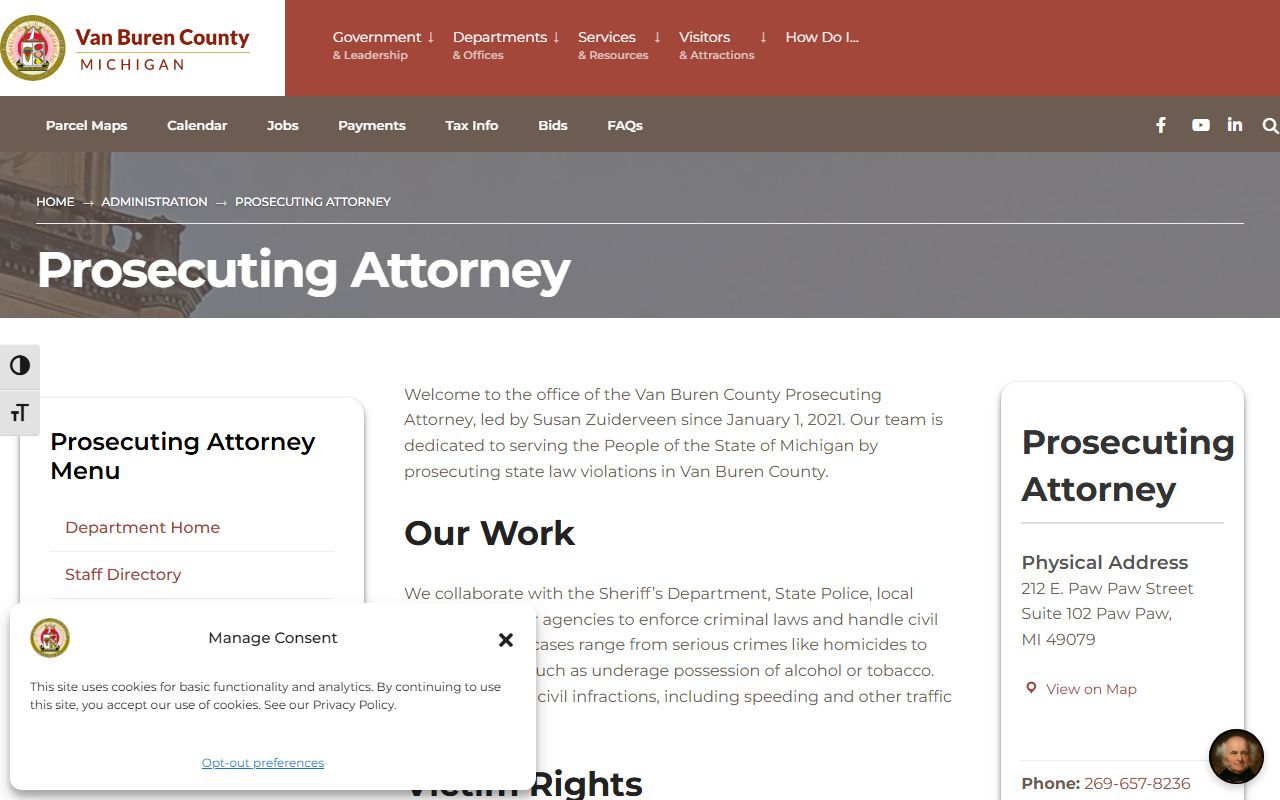
Charges do not come from the police alone. After an arrest, the Van Buren County Prosecuting Attorney reviews the reports and decides which state-law charges to file, if any. The office prosecutes those charges through the district and circuit courts on behalf of the People of the State of Michigan.
The Prosecuting Attorney's Office has been led by Susan Zuiderveen since January 2021.
Because the prosecutor controls the charging decision, the charges in a case file can change over time. A count may be amended, reduced, or dismissed as the case develops. Those changes appear in the record, which is why the filed charge and the final conviction are not always the same offense.
Charges vs Convictions in Van Buren County Records
Reading a criminal record correctly means telling a charge apart from a conviction. A charge is an accusation the prosecutor files. A conviction is a finding of guilt by plea or verdict. Many charges never become convictions, and a record can show both on the same case.
| Charge | Conviction | |
|---|---|---|
| Meaning | An offense the prosecutor formally files | A finding of guilt entered by the court |
| Stage | Filing through pretrial | After a plea or trial |
| Can Change | Amended, reduced, or dismissed | Final unless appealed or set aside |
| Record Effect | Shows an accusation, not guilt | Shows the outcome and sentence |
Note: A filed charge is not proof of guilt, so a record that lists a charge without a conviction should be read as an accusation only.
Public Defenders in Van Buren County Cases
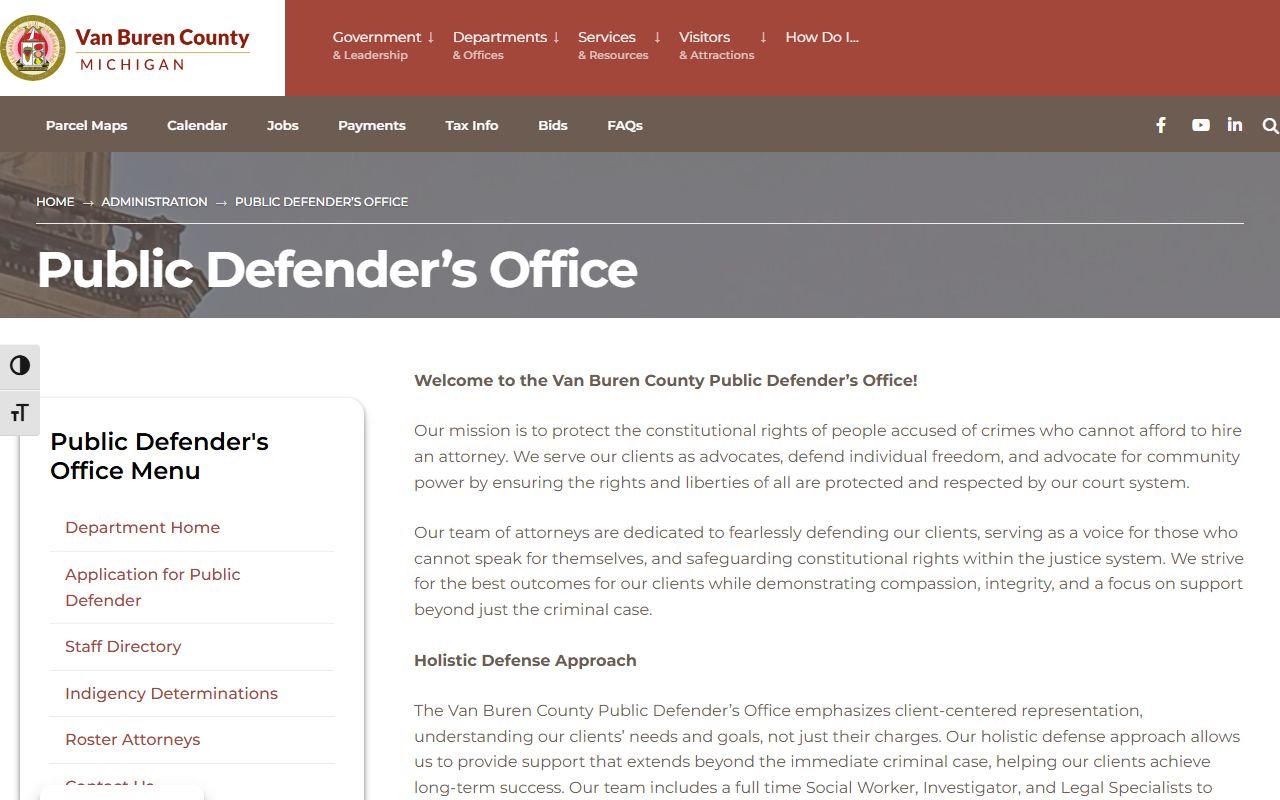
People accused of crimes who cannot afford a lawyer have a right to counsel. Van Buren County meets that duty through its Public Defender's Office, which represents indigent defendants in criminal cases. The office defends individual rights and freedom throughout the court process.
The Public Defender's Office handles the core of this work.
Some cases go to appointed private attorneys instead of staff defenders. The county maintains a roster of those attorneys with their contact details.
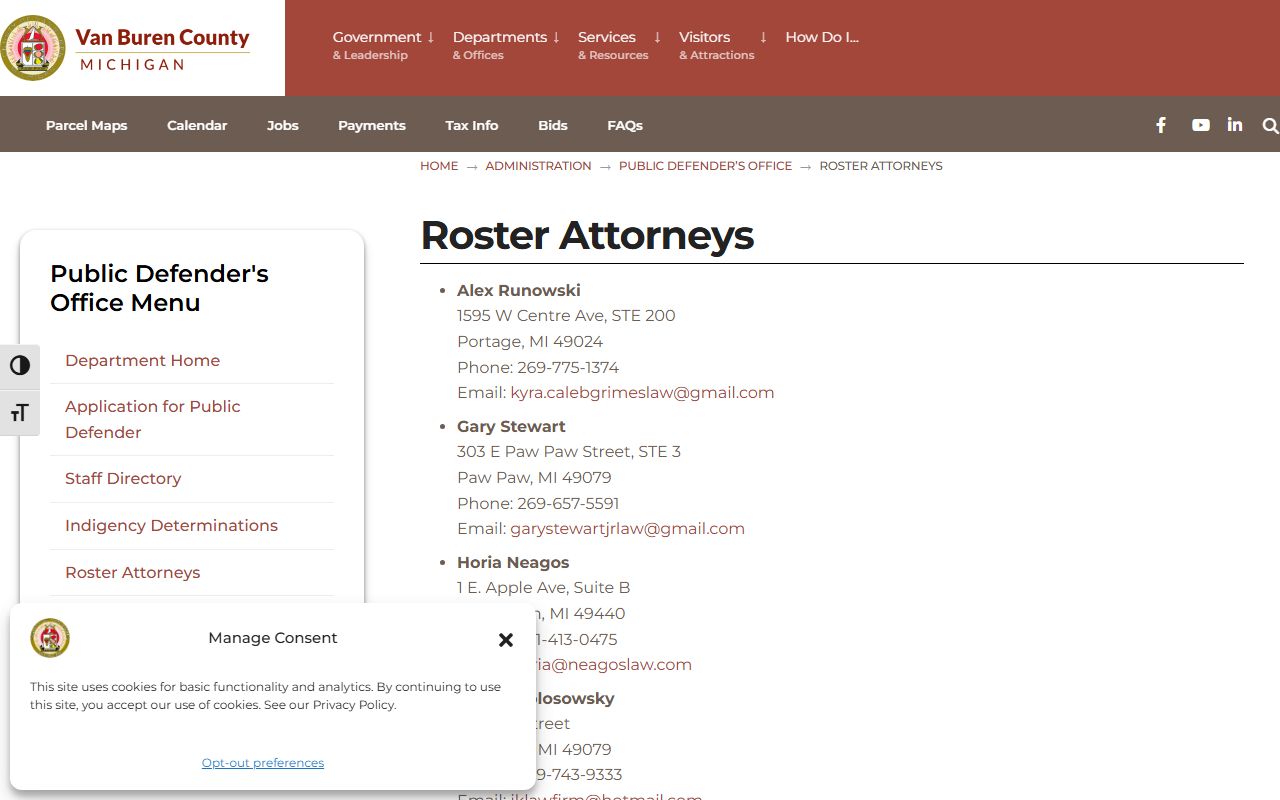
The roster of appointed counsel lists who may take a case. The public defender is part of the court process, not a records office, so record requests go to the clerk or the court instead.
Bond, Bail, and Warrants
Bond and warrant activity fills much of a criminal record's early pages. At a Van Buren County arraignment, a judge or magistrate may set bail, which is the amount or condition for release before the case ends. Bond is the money or promise that secures a defendant's return to court. The record shows the amount set and any changes.
Warrants also generate entries. The Van Buren County district court can issue arrest and search warrants, and a bench warrant often follows a missed court date or a probation violation. These items may surface in the docket, the jail roster, or a warrant record.
- Arrest warrant: authorizes taking a person into custody on a charge.
- Bench warrant: issued by a judge for a missed hearing or unmet condition.
- Search warrant: authorizes a search tied to an investigation.
- Probation violation: can trigger a warrant and a return to court.
Sentencing, Probation, and Specialty Courts
The sentence is the record's final major entry. After a conviction, a Van Buren County court may order jail, probation, fines, costs, and restitution. Probation places a person under supervision in the community with conditions, and any violation can send the case back to court. All of that shows in the file.
Van Buren County also runs problem-solving programs that can shape a sentence. These specialty courts pair supervision with treatment for eligible defendants, and entries may appear after sentencing or a violation.
- Mental Health Court, for defendants tied to community mental health treatment.
- Drug Treatment Court, for non-violent defendants with substance issues.
- Sobriety Court, for eligible OWI cases.
- Swift & Sure, an intensive supervision program for high-risk felony probationers.
The county's specialty courts pages explain eligibility. A specialty court is never guaranteed, since acceptance depends on the offense and the person's history.
Public Access to Van Buren County Criminal Records
Most adult criminal court records are open to the public. Michigan handles court files under court rules rather than ordinary agency practice, and under MCR 8.119 the clerk maintains the case files and manages public access to them. A member of the public can search a Van Buren County case, view most filings, and request certified copies from the clerk.
The court file is not the only record tied to a case. Arrest, booking, and jail records stay with the Van Buren County Sheriff's Office and follow the Michigan Freedom of Information Act. When the court file does not hold what you need, the county FOIA request router sends those requests to the sheriff's records path.
Note: Court records follow Michigan Court Rules, while sheriff and booking records follow the state FOIA, so the request path depends on who keeps the record.
Sealed and Set-Aside Van Buren County Records
Michigan uses the term "set aside" for what many people call expungement. A sealed or set-aside record changes what the public can see, but the two work differently. The comparison below sorts them out.
| Sealed Record | Set-Aside Conviction | |
|---|---|---|
| What Happens | Access is closed by court order or statute | A conviction is removed from public record by order |
| Trigger | Statute, juvenile status, or a specific order | An approved application to the court of conviction |
| Form | Varies by case type | Application MC 227 for most convictions |
| Result | Record exists but is not public | Public conviction record is set aside |
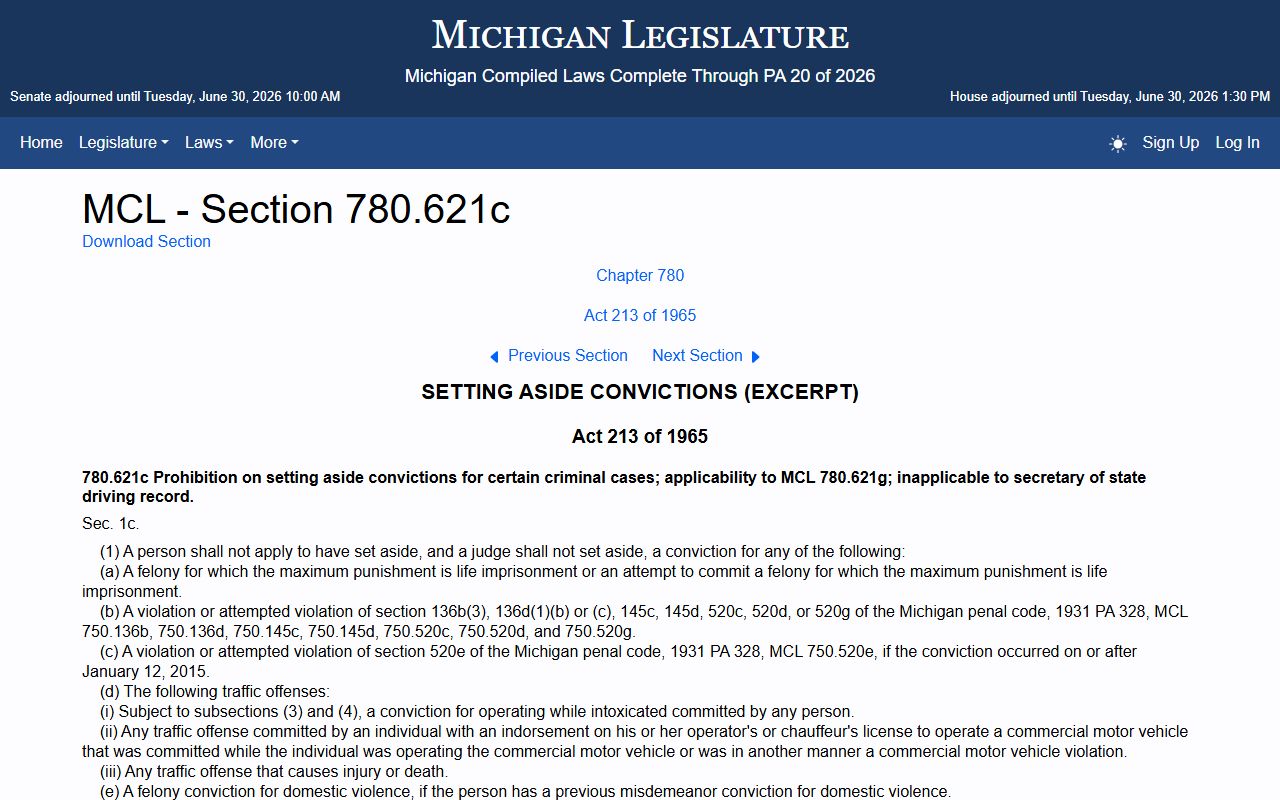
A set-aside starts in the Van Buren County court where the conviction occurred, using form MC 227, with a separate application for each court. The record effects follow statutes like MCL 780.621c, which addresses traffic-offense set-asides and how they affect the record.
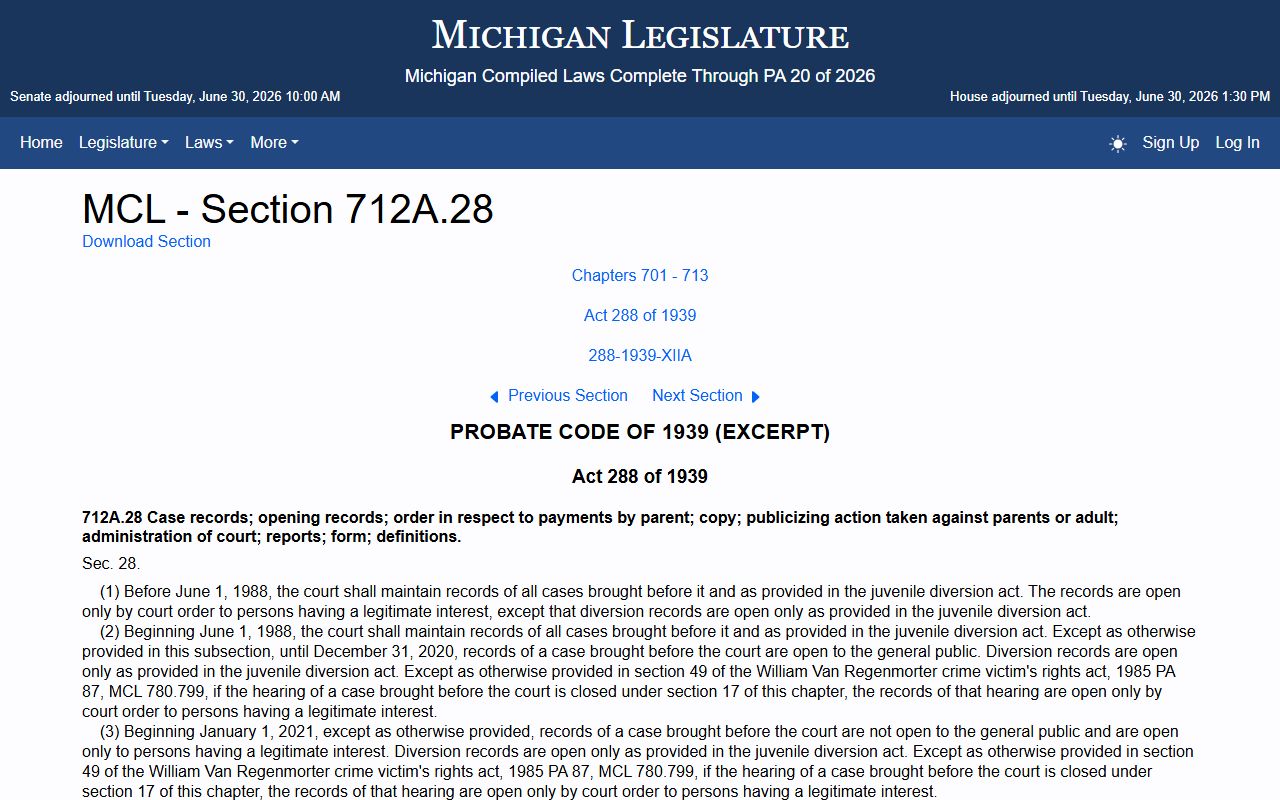
Juvenile cases sit apart from adult records. Under MCL 712A.28, juvenile case records are kept by the court but open only by court order, so a public search will not show juvenile details.
For the full range of civil, family, and probate files beyond criminal matters, the county court records search covers the other case types.